A plea for a small change to the way we describe the place we call home
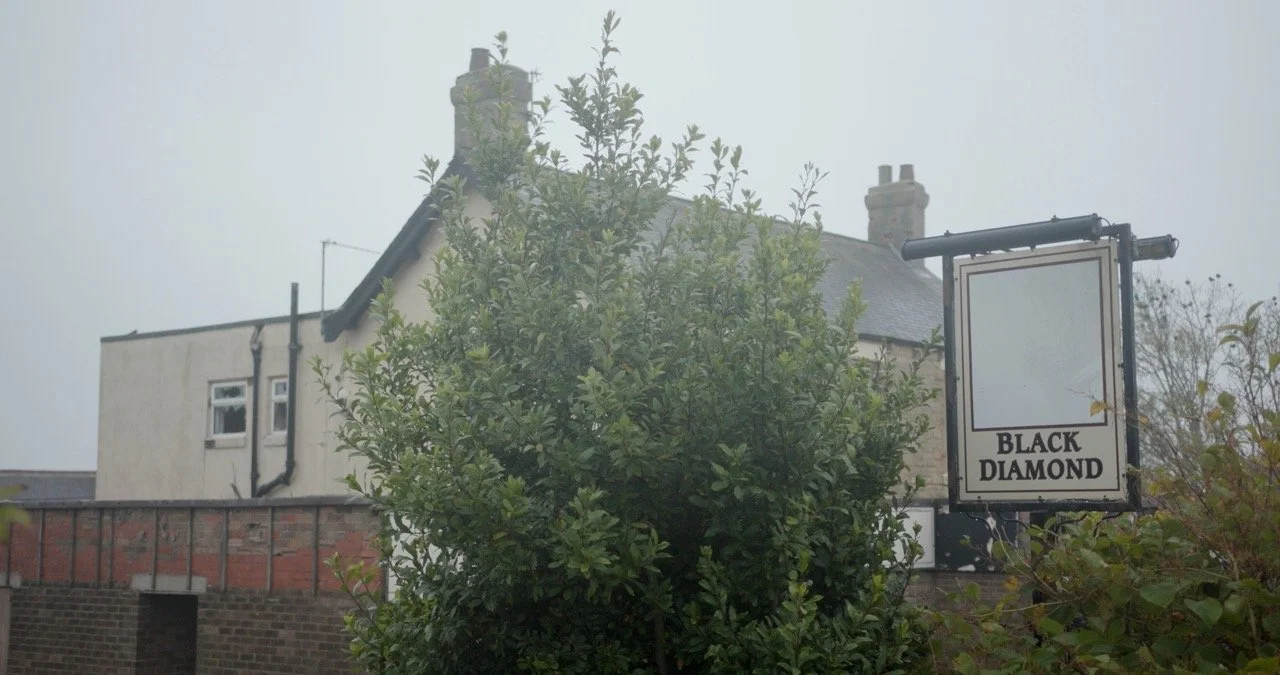
The derelict Black Diamond pub in Delves Lane, County Durham. Community spaces like libraries, leisure centres and even pubs have been disappearing throughout the coalfield for decades. Image: a still frame from my forthcoming documentary film Ghost Train.
The words we use matter … don’t they?
This is either a chip on my shoulder or a gallant crusade (you decide) but I’ve now heard too many good people doing good work using a bad word.
The word “post-industrial” is historically inaccurate, insidiously harmful and, today, just plain wrong.
Post-industrial implies something that has happened passively: time has moved on, industries simply ‘became’ obsolete, we have transitioned naturally into a new era.
Deindustrialised, on the other hand, names an action - it describes something that was done to our communities, by identifiable actors for political reasons.
The Ridley Plan
In 1977 the Conservative MP Nicholas Ridley drew up a strategy with one goal: defeat Britain's trade union movement. The miners, having brought down Edward Heath's government in 1974, were a key target. The basics of his plan: stockpile coal, import from non-union ports, train riot police and cut off money from the strikers. This wasn't a response to economic necessity, it was revenge, and a blueprint for breaking organised labour.
Margaret Thatcher got hold of Ridley’s plan and the rest is history: the 84-85 strike was provoked and the miners were eventually defeated. The mine closures that followed weren't market corrections, they were the execution of a political strategy designed years in advance. Huw Beynon and Ray Hudson’s excellent book The Shadow of the Mine documents this all very clearly - the closures were deliberate and our communities paid the price.
It is not a green badge of honour
The word “postindustrial" often carries a vague green implication - as if we've moved beyond dirty industry into a cleaner era. But the pit closures had nothing to do with environmentalism. Thatcher's plan predated widespread understanding of climate change and coal didn’t stop being burned, it was just imported instead (indeed adding the carbon footprint of shipping into the mix). By 2012 the UK was importing 45 million tonnes annually from Russia, Colombia and the USA. You can’t retrospectively dress up a direct attack on organised labour - as documented plainly in Ridley’s plan - as environmental progress.
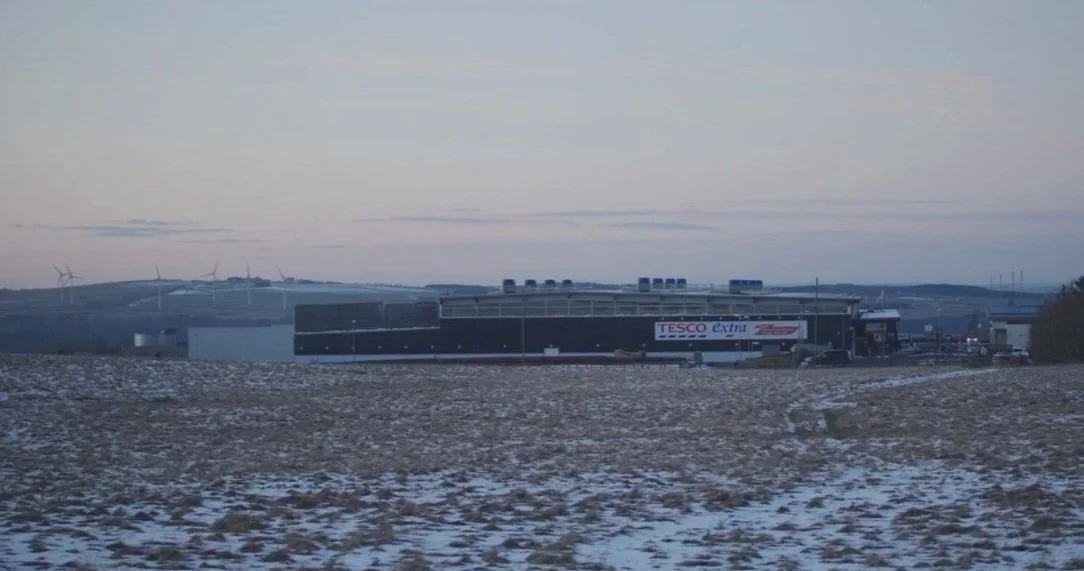
The site of Consett Steelworks in County Durham, which was closed in 1980, is now occupied by a Tesco superstore and a housing estate with street names such as Monarch Road, Queen Elizabeth Drive and Duke’s Way. Image: another still frame from my forthcoming documentary film Ghost Train.
We’re not “post” anything
The coalfield communities still have not recovered from the trauma of deindustrialisation. Their beating heart was quite literally ripped out and never repaired. Many former colliery towns and villages in Durham are among the most deprived in the country. Life expectancy in former coalfield areas is around three years lower than in Southeast England. These statistics aren’t bad luck or a sacrifice made in the name of positive progressive change, they are the ongoing consequences of deliberate political decisions made forty years ago. To frame this landscape as “postindustrial" obscures the root cause of these issues: “deindustrialised" names it.
We’re not even “not-industrial”
Take for instance the AI data centre developments in the North East, such as Blackstone's £10 billion facility near Blyth. This is industry - heavy infrastructure consuming vast amounts of energy with significant environmental impact. It's projected to emit around 184,000 tonnes of CO2 annually - more than Birmingham Airport - but it’s expected to create only 400 permanent on-site jobs. Compare that to the tens of thousands who lost their livelihoods when the pits closed.
We are not post-industrial. We were de-industrialised. Industry was obliterated as a deliberate political act, and now, it seems, we are being re-industrialised on terms that serve not our communities, but billionaires in a different country. The language of "postindustrial" obscures both what was done and what is being done.
It’s just a word - divvn’t fret man
Maybe it doesn’t matter that much, in the grand scheme of things, what words get used. Maybe it’s just the way of the world. Perhaps, like the industrial monuments of our region being unceremoniously erased (see the Redcar Blast Furnace and Dorman Long Tower for recent examples) it’s just the inevitable entropy that befalls all things.
I don’t have a problem with moving on from our region’s mining past. What I do not like, though, is the idea of letting those who deliberately inflicted harm on our community - harm that continues to be felt to this day - off the hook. Using the word “deindustrialised” is a small, arguably insignificant act, but it is a meaningful one that keeps the question of agency and accountability alive. It refuses the narrative that what happened here was natural or inevitable. Because it just wasn’t - and whether it is imposed AI data centres, or actually investing in our communities meaningfully and sustainably - neither is our trajectory today inevitable.
Naming what happened here as deindustrialisation recognises that it’s all about political choice. If industry was removed through political choice, then investment, support, and repair can also be political choices made today. Sometimes it feels like there’s very little we can do to influence these decisions that get “done to us” but the least we can do is call it what it is.